The island of Hvar
Getting there
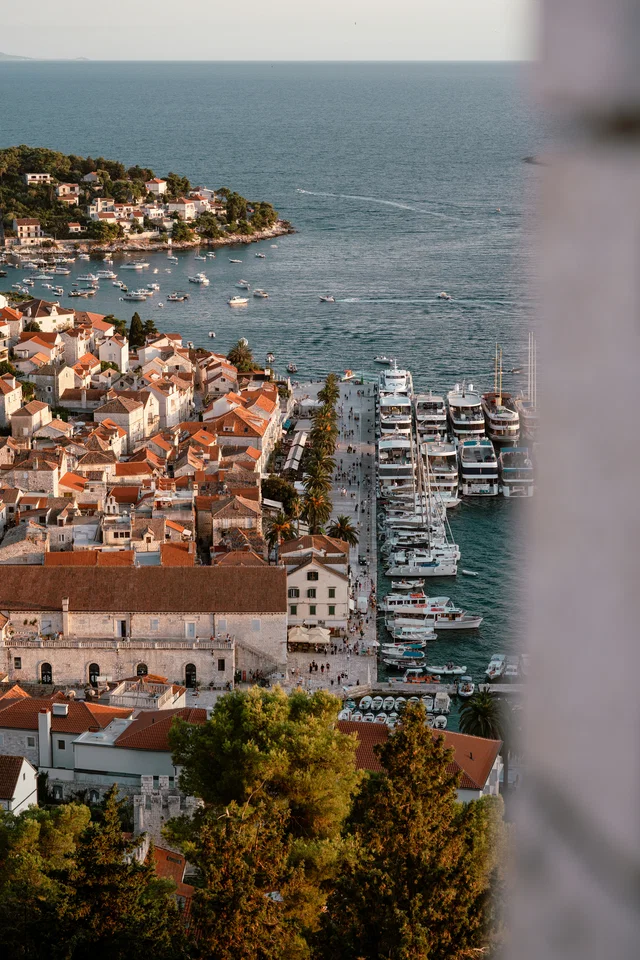

Hvar sits in the Adriatic, off Croatia’s Dalmatian coast. A long, narrow island of stone villages, lavender fields and pine.
It is the sunniest island in Europe, and holds more UNESCO-listed heritage than any island on earth.
Two major ports serve it. Hvar Town at the western end, Stari Grad in the middle. Jelsa and Pitve, where the week happens, sit east of Stari Grad.

Split to Hvar

Flying in
Split is the airport you want
Split (SPU) is the airport you want. It sits about thirty minutes from the ferry port.
From Australia and New Zealand, expect one stop. From within Europe, direct flights are plentiful in September.
Other options. Zagreb (ZAG), Zadar (ZAD) and Dubrovnik (DBV) all connect onward to Split by road, rail or a short hop. Worth checking if the fare works better.
Split’s airport bus runs to the city terminal. Taxis and private transfers are straightforward.

Arriving by rail
Everything in Split sits together
Split’s train station, bus station and ferry port sit beside each other, a few minutes’ walk apart.
Seasonal sleeper services run from Vienna and Graz, from Budapest, and from Prague, all via Zagreb. They operate into late September, and some carry vehicles.
Book early. Cabins sell out well ahead.
Crossing to the island
Two kinds of boat make the crossing
Two kinds of boat make the crossing, and the difference is whether you are bringing a car.
Passenger catamaran. Split to Hvar Town, about an hour, several sailings a day. Walk on, no vehicle. The simplest option if you are travelling light.
Car ferry. Split to Stari Grad, around two hours. Takes vehicles and foot passengers. Your ticket reserves the vehicle space, so book ahead rather than turning up. Arrive at the port at least forty-five minutes before departure, an hour in peak season.
If you land too late to cross, stay the night in Split and take the first boat. Private transfers are the other route, and there is more in the FAQ.

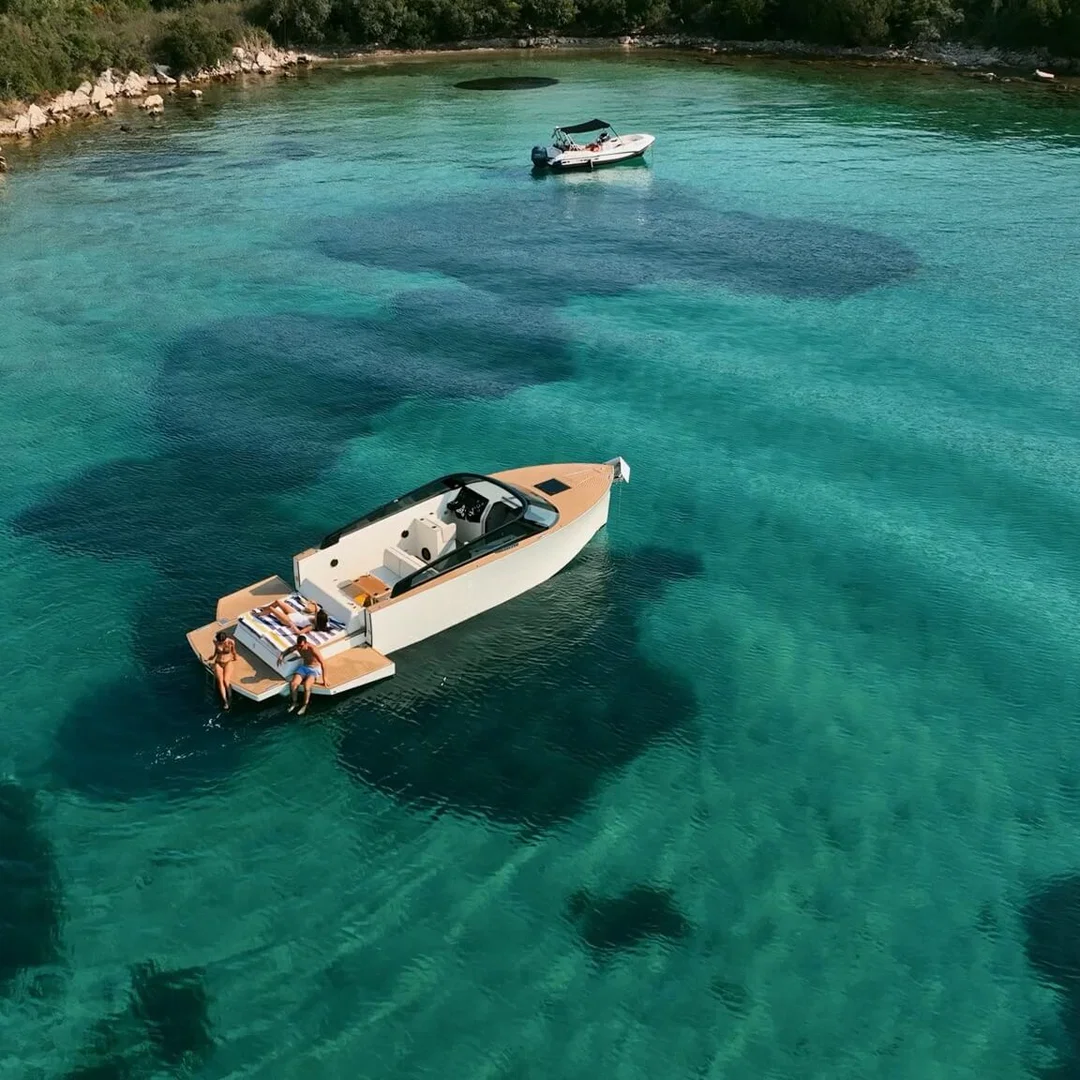
Hire cars
Cheaper in Split, simpler on the island
Cars are available in Split and on the island. Split is usually the cheaper pick-up, and we would start there.
The trade-off is the ferry. A car means the Stari Grad crossing and a booked vehicle space.
Hiring on the island avoids that entirely, at a price.
Getting around
There is no Uber on Hvar
Taxis exist, and shared taxis too, but there are few of them. Arrange one ahead rather than expecting to hail it.
Cars, scooters and mopeds are all hireable on the island.
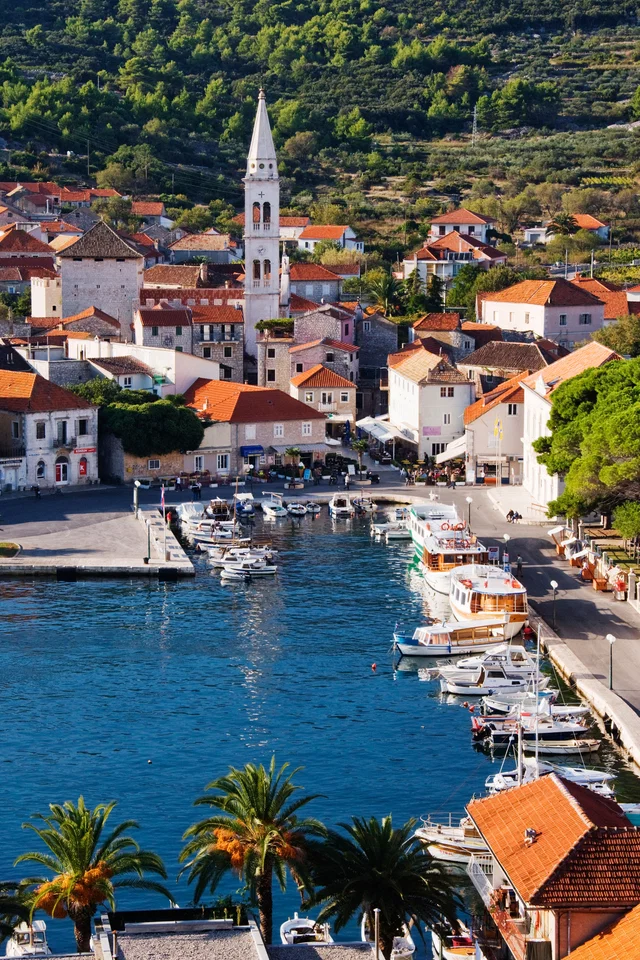
Jelsa, Stari Grad and Hvar Town are comfortably walkable once you are there.
Worth knowing. Getting to the welcome cocktails, the wedding and the recovery day is your own arrangement. If you are in a hotel, reception will book a car for you. Otherwise, hire something or pre-book a taxi.